
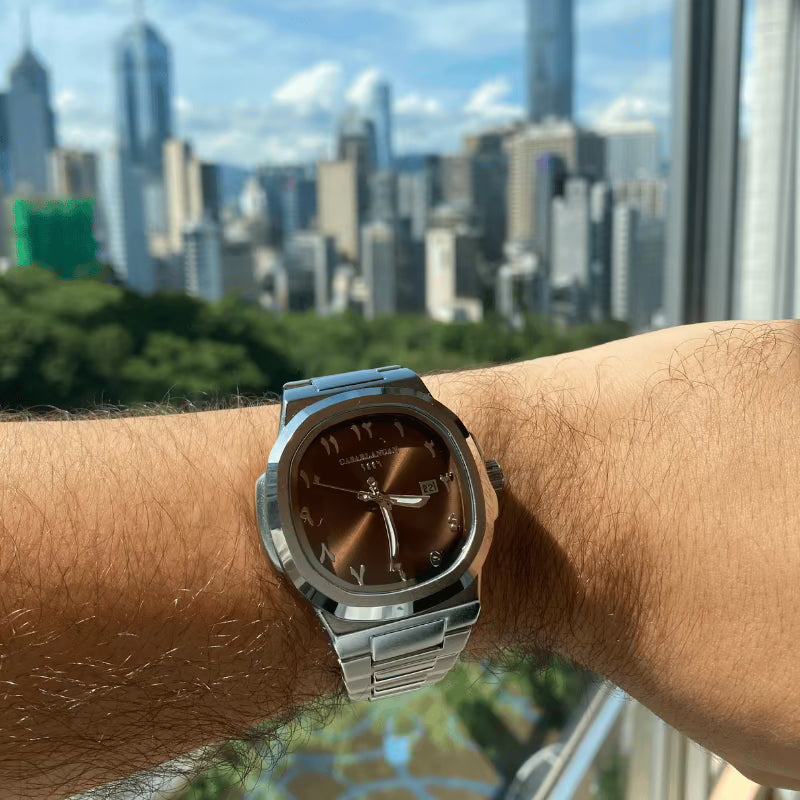
What a sunray dial really looks like in daylight
Quick answer: In daylight, a sunray dial shows fine lines fanning out from the center and a bright band of light that moves across the face as you tilt your wrist. The color looks livelier than indoors, paler where the light lands and deeper toward the shaded edges. Cloud cover softens the streak into a broad, gentle glow.
A sunray dial watch looks different in daylight than it does under a lamp or in a photo. Judge one outdoors and at an angle, because direct sun is where its texture and color actually show. Fine lines brushed outward from the center catch the light and form a bright band that swings across the face as you tilt your wrist. The color shifts as well, lighter where the sun lands and deeper toward the edges.
By the end of this guide on the sunray dial, you will know what to look for when you hold one in sunlight, in shade and indoors. You will be able to tell whether the shifting color suits your wrist and the clothes you wear most, or whether a calmer dial fits you better.
Key facts
- In direct sun, fine lines radiate from the center and a bright band crosses the face, livening the color.
- The bright streak is flanked by darker wedges and moves around the face as you shift your wrist.
- Contrast between the bright streak and the shaded wedges is sharpest under strong midday sun.
- A turquoise sunray dial can look pale where the light falls and deeper, cooler toward shaded edges.
- Overcast skies soften the streak into a broad glow, keeping the fine lines visible without strong contrast.
- Holding the dial at a steep angle can turn one half pale and the other much darker.
What does a sunray dial watch look like in daylight?
In direct sun, a sunray dial shows fine lines fanning out from the center and a bright band of light across the face, so the color looks livelier than it does indoors. Under a desk lamp or office lighting, the same dial can look almost flat, closer to a plain painted surface. Step outside and the texture comes forward. The brushed lines that seemed invisible a moment ago suddenly read as a pattern you can follow from the middle to the edge.
The band of light is the most visible daylight effect on a sunray dial. Sunlight gathers into a bright streak that runs outward from the center, with darker wedges on either side of it. Move your wrist slightly and that streak travels around the face, much like a clock hand. Under strong noon sun the contrast between the bright streak and the shaded wedges is at its sharpest.

Sunray color also gains depth outdoors. A turquoise dial, for example, can look pale and almost glowing where the light band falls, then deeper and cooler toward the shaded edges. Darker shades such as black or brown show the same split, with a lighter tone in the bright zone. A single dial can therefore show you two or three versions of its color at once.
A sunray dial on an overcast day sits between the indoor and full-sun looks. Cloud cover softens the sharp streak into a broad, gentle glow, and the fine lines stay visible without strong contrast. That middle state is often the closest match to how the dial will look on an ordinary commute.
Why does a sunray dial seem to change color when you tilt your wrist?
The shade you see on a sunray dial depends on which brushed lines are bouncing light toward your eye, and tilting your wrist changes which lines those are. The color applied to the dial stays exactly the same the whole time. What shifts is how much light each zone of the surface sends back to you. More reflected light reads as a paler, brighter tint, and less reads as a deeper one.
Radial brushing is the reason the effect is so strong on a sunray dial. Each fine groove runs from the center to the edge like a spoke, so the grooves around the circle all point in different directions. A groove reflects most strongly when it sits roughly crosswise to the path between the light source and your eye. Only a narrow slice of the dial meets that condition at any moment, so that slice glows while the rest falls back.
Tilting your wrist moves that glowing slice to a new set of grooves, and the angle decides how much of the face looks light or dark. Hold the dial nearly flat toward the sky and a wide area can brighten at once. Angle it steeply and one half may turn pale while the other drops several shades deeper, giving a nearly two-toned look. A small turn of the forearm is enough to carry the dial through all three of those states.
How should you test a sunray dial outdoors before deciding?
Take the watch outside and view the dial in full sun, in open shade and at several wrist angles, since indoor light flattens its texture and color. Ceiling fixtures and display lamps spread light from many directions at once, so the brushed lines rarely line up into a single bright band. A dial judged only under them can look flat and even. Its color may also read a shade or two away from what you will see on the street.
A sunray dial in direct sun shows you the strongest version of its effect, so start there. Face the light, hold your wrist at reading height and rotate it slowly until the bright streak crosses the hands. Ask yourself whether the time is still easy to read when the contrast peaks. If the glare bothers you at that moment, it will bother you on every sunny afternoon.
Open shade is the second stop for a sunray dial, such as the side of a building or the cover of a tree. Light there is softer and arrives from a wider area, so the streak fades into a gentler sheen. This is closer to the look you will live with on most days. Check that the color still pleases you without the sparkle doing the work.
Several angles complete the outdoor check on a sunray dial. Tip the face nearly flat toward the sky, then tilt it steeply, then glance at it the way you would at a crosswalk. Notice which view you like least, because quick sideways glances happen far more often than careful, square-on looks.
Arabic numerals and Khanjar hands against a sunray finish
A numeral at every hour gives your eye twelve fixed reference points, so the time stays easy to find even when a bright streak crosses part of the face. The numerals run from ١ at one o'clock to ١٢ at the top. Each one sits in the same place whether the grooves beneath it are glowing or in shadow.
Eastern Arabic numerals take a little practice if you grew up with Western digits, and daylight is a good place to get it. Two shapes cause most early mix-ups: ٥ is five, though its rounded form can look like a zero to new eyes. The real zero, ٠, is a small dot and shows up only inside ١٠. Check the top of the dial at a steep angle, when half the face drops dark, and see whether ١٠, ١١ and ١٢ still separate clearly.
A curved blade gives each hand a distinct outline, so you can tell hour from minute by shape as well as length. In full sun, follow the tips rather than the whole hand. A pointed blade should land clearly on its numeral even when the brightest band of the sunray sits right behind it.
Green, black, brown and turquoise versions of the sunray dial each set a different backdrop for the same numerals and hands. Whichever color you try, repeat the crosswalk glance with the time in mind instead of the color. Ask whether you caught the hour from the numeral and the blade before the glance ended. If you did, the markings are working with the finish rather than against it.
Which sunray dial color suits you in everyday light?
Pick the sunray color you still like once the bright streak is gone, judging each dial in shade and indoors as much as in full sun. A sunray finish needs a direct light source to flash, and most rooms offer only scattered light. Indoors, every sunray dial reads a step darker and calmer than it did on the sidewalk.
A black sunray dial changes the least between settings. In sun it shows a silvery sweep across a dark ground, and indoors it settles into something close to solid black. A brown sunray dial behaves in a similar way but warmer, moving from a bronze glow outdoors to a deep chocolate tone under lamps.
A green sunray dial travels further, flashing a lighter, livelier green in direct sun and dropping toward a dark forest shade inside. A turquoise sunray dial shifts the most of the four, because its pale blue-green brightens sharply in daylight. Under room light, turquoise keeps more visible color than the darker options, so it stays noticeable at a desk or a dinner table.
A quick two-step test settles the choice between sunray colors. Look at the dial in full sun, then step inside and check it again under ordinary room light within a minute or two. If the indoor view is the one you would happily wear on a workday, let that view decide, since indoor light fills most working hours.

The Al Majaz is our own watch, and its turquoise sunray dial suits the outdoor test this guide recommends. Under sapphire crystal, the fine radiating lines catch daylight as you tilt your wrist, so the turquoise shifts in tone. Hands shaped like the Khanjar dagger and Eastern Arabic numerals at every hour sit against that changing color. The Al Majaz pairs a 43mm, 11mm-thick 304 stainless steel case with a steel bracelet and costs $89.
Frequently asked questions
Why does a sunray dial look flat indoors?
Ceiling fixtures, desk lamps and display lamps send light from many directions at once, so the brushed lines on a sunray dial rarely line up into one bright band. Under that light the dial can look almost like a plain painted surface, and its color may read a shade or two off.
How does a sunray dial look on a cloudy day?
A sunray dial under overcast skies sits between its indoor look and its full-sun look. That middle state often comes closest to how the dial looks on an ordinary commute.
Does the paint on a sunray dial actually change color?
The color applied to a sunray dial stays exactly the same. What changes is how much light each zone of the surface reflects toward your eye. More reflected light reads as a paler, brighter tint, while less reflected light reads as a deeper one.
Can glare make a sunray dial hard to read in the sun?
Glare on a sunray dial peaks when the bright streak crosses the hands, so test the dial in direct sun at that moment. If the glare bothers you then, it will bother you on every sunny afternoon. A numeral at every hour gives your eye twelve fixed reference points that help.
How does a turquoise sunray dial look in sunlight?
A turquoise sunray dial can look pale and almost glowing where the band of light falls. Toward the shaded edges, the same turquoise turns deeper and cooler. As a result, one dial can show two or three versions of its color at the same time.
Casablancan makes the Al Majaz mentioned in this article.
Read more
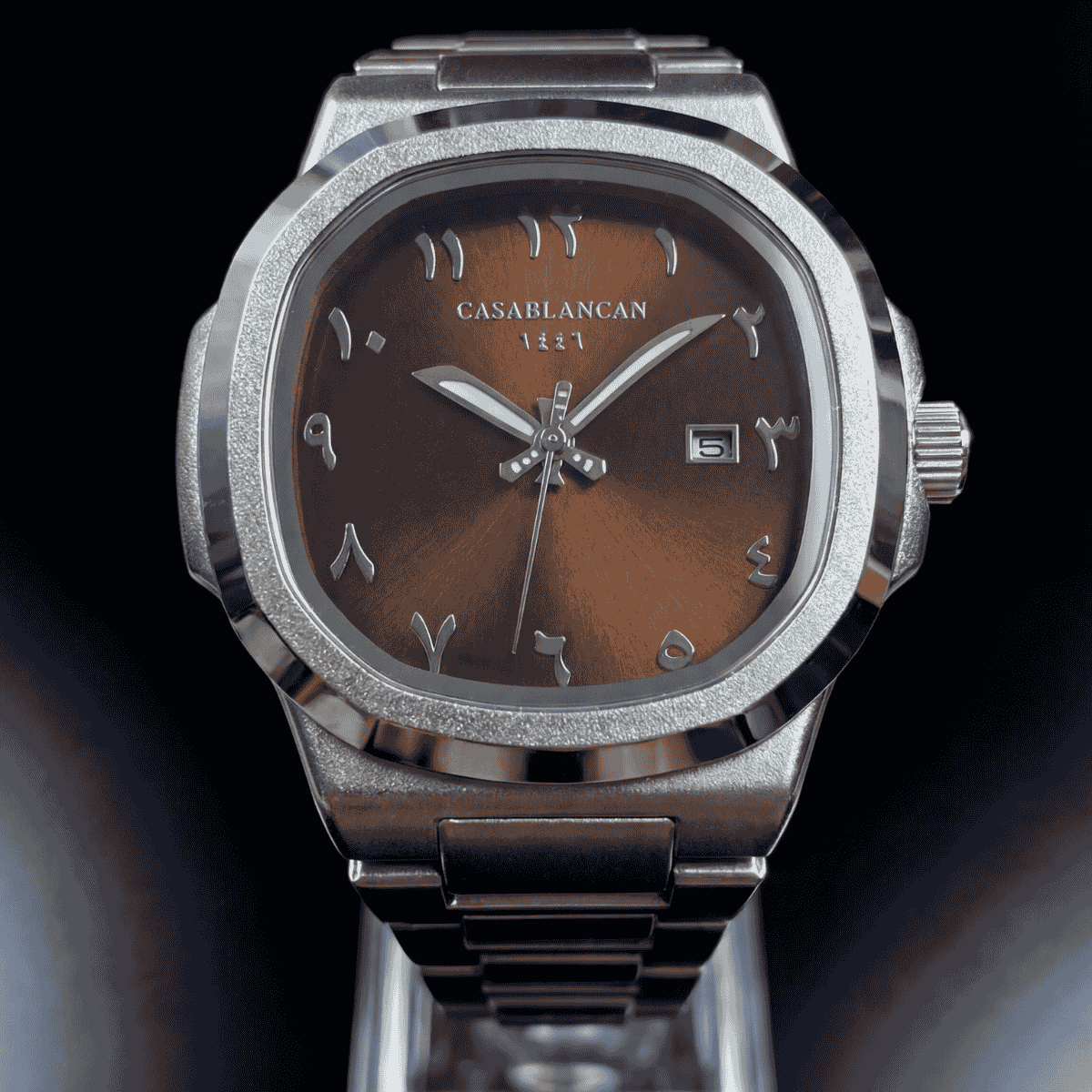
Arnold & Son has released two Time Pyramid 42.5 Agate editions: 18k red gold with red agate and 950 platinum with blue agate, each limited to eight pieces. Thin 0.4mm agate sits on the dial, le...
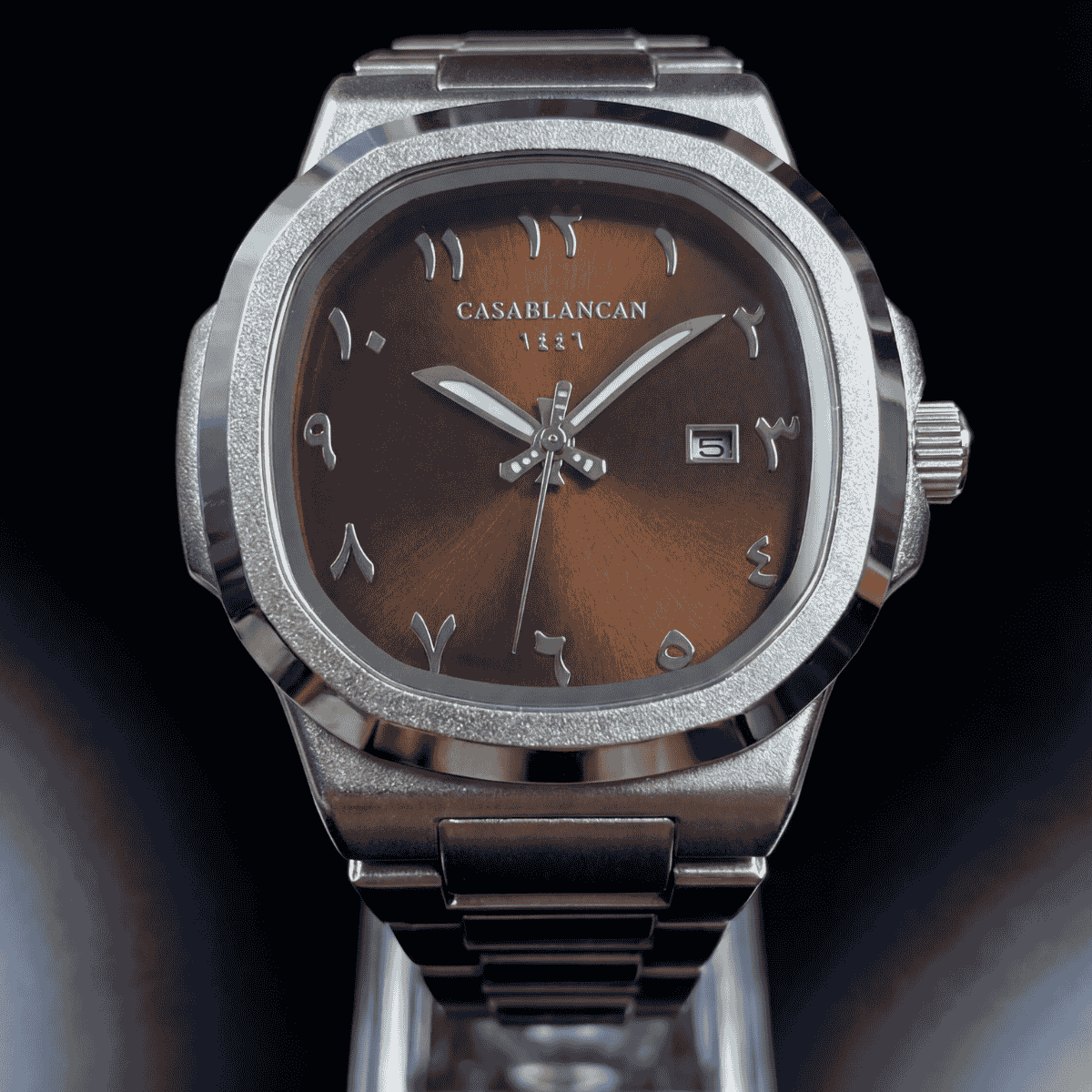
Bangalore Watch Company opened pre-orders for the Epoch on November 18, 2026, at $3,100 USD. The dress watch comes as the Executive or the Statesman, is 39mm wide, uses a hand-wound Swiss Sellita S...