
What watch to wear with a kandura and why simple wins
The best watch to wear with a kandura is a simple one that sits low and flat on your wrist. A kandura's sleeve is loose and long, so flashy designs and bulky cases get hidden in the fabric and add nothing. A clean dial on a steel bracelet, by contrast, shows plainly whenever your arm moves. Keep the face easy to read and the case modest in height.
By the end of this guide, you will know how to judge any watch you plan to wear with a kandura. You will be able to weigh case size and thickness against a loose sleeve and decide how the watch should sit on your wrist. You will also see how matching dial color to one other thing you wear makes the outfit look planned.
Key facts
- Choose a clean dial with clear hour markers, two or three hands, and no chronograph pushers or crowded subdials.
- A case about 43mm wide and 11mm thick shows at a loose sleeve yet slips under a shirt cuff.
- Tall cases, protruding pushers, oversized crowns and notched bezels can snag light kandura fabric and create a visible bump under the sleeve.
- Adjust the band so one finger slips underneath, keeping the watch in place without pinching your wrist.
- Pick a sunray dial color that matches one other item, such as brown sandals, a black agal, or a green wallet.
- On a dark kandura, a green or turquoise dial stays visible, while a black dial tends to sink into the cloth.
What watch should you wear with a kandura?
A kandura is usually a single color from collar to hem, and a quiet watch keeps that clean line intact. Think of the watch as one small accent, not a second focal point. You want the outfit noticed first and the watch a moment later.
A simple watch for a kandura has a clean dial with clear hour markers, two or three hands, and little else. Leave chronograph pushers, chunky bezels and crowded subdials for other outfits, since they add height and visual noise near the cuff. A smooth case and a dial with one strong color or texture look calm against plain fabric. A steel bracelet or a plain leather strap both work, as long as the band follows the case's restrained shape.

A watch that sits low on the wrist has a case that hugs the arm instead of rising above it, on a band adjusted so the watch stays in place. Fit matters as much as the case itself. A bracelet that hangs loose slides toward your hand every time you gesture, while one that is too tight pinches. Aim for room to slip one finger under the band, so the watch shows at the sleeve's edge whenever you raise your arm.
A low-profile watch also suits the many places a kandura goes, from a weekday at the office to a wedding or a family dinner. Because the design stays restrained, the same watch fits each of those settings without looking out of place.
Why does a loose kandura sleeve punish flashy or bulky watches?
A loose kandura sleeve punishes flashy or bulky watches because the fabric covers the dial most of the time and drags across anything that sticks out. The wide sleeve opening lets the cloth rest on top of the watch instead of stopping at its edge. Each time you lower your arm, the fabric slides over the case and settles there. A tall case pushes that cloth up into a visible bump, which breaks the straight fall of the robe.
A chunky watch also gives the sleeve plenty to catch on. Protruding pushers, an oversized crown and a raised, notched bezel can snag light fabric as you move through the day. Over hours of reaching, writing and greeting, that rubbing can pull loose threads near the cuff and leave the hem looking worn. A smooth case with soft edges lets the sleeve glide past with no resistance at all.
A busy dial suffers in a different way under a flowing sleeve. Your watch usually shows only in brief glimpses, such as when you reach for a cup or shake a hand. In that moment, small subdials, fine print and mixed finishes blur into clutter rather than detail. One clear color and plain hour markers register at a glance, so the restrained watch reads cleaner than the ornate one.
How big and how thick should a watch be with a kandura?
Aim for a case about 43mm across and 11mm thick on a steel bracelet, a size that shows at a loose sleeve yet stays slim enough for a shirt cuff. That diameter gives the dial enough room for the hour markers to read when the sleeve shifts. A much smaller case can disappear inside a wide kandura sleeve opening.
Case height deserves as much attention as width. Many men also move between a kandura and Western clothes during the same week.
A quick check at home tells you whether a watch suits your wrist. Lay the watch flat and look at where the lugs end: they should stop at or inside the edges of your wrist, not hang past them. Then button a dress shirt cuff over the case and move your arm. If the cuff closes easily and glides over the watch without catching, the height works with a tailored shirt as well as with a kandura.
Which dial color works with a white, cream or dark kandura?
Choose a sunray dial that repeats the color of one other thing you wear, and green, black, brown or turquoise can each work with a white, cream or dark kandura. Casablancan's styling rule keeps the match to a single item, so the watch looks deliberate without turning the outfit into a theme. A white kandura acts as a blank backdrop, which lets almost any dial color stand out. The task is simply to give that color one partner somewhere else on you.
A brown sunray dial pairs easily with brown leather sandals, or with a brown belt when you switch to trousers. On a cream kandura, brown stays in the same warm family, so the whole look feels calm and even. A black dial can pick up the black agal cord many men wear over a white headscarf, linking wrist and head in one quiet line. Against a white robe, black also gives the sharpest contrast.
A dark kandura in navy, charcoal or deep brown calls for a different choice. A black dial tends to sink into dark cloth, while a green or turquoise sunray dial keeps its color visible against it. Green suits a man who already carries something green, such as a wallet, a cap or a ring stone. Turquoise works the same way with a turquoise stone, and it brightens a white robe in summer.
A sunray finish shifts shade as light moves across it, so the dial looks lighter or deeper depending on the angle. That shimmer means the color match never has to be exact, only close enough to read as related.
Eastern Arabic numerals and Khanjar hands: Dial details that suit Gulf dress
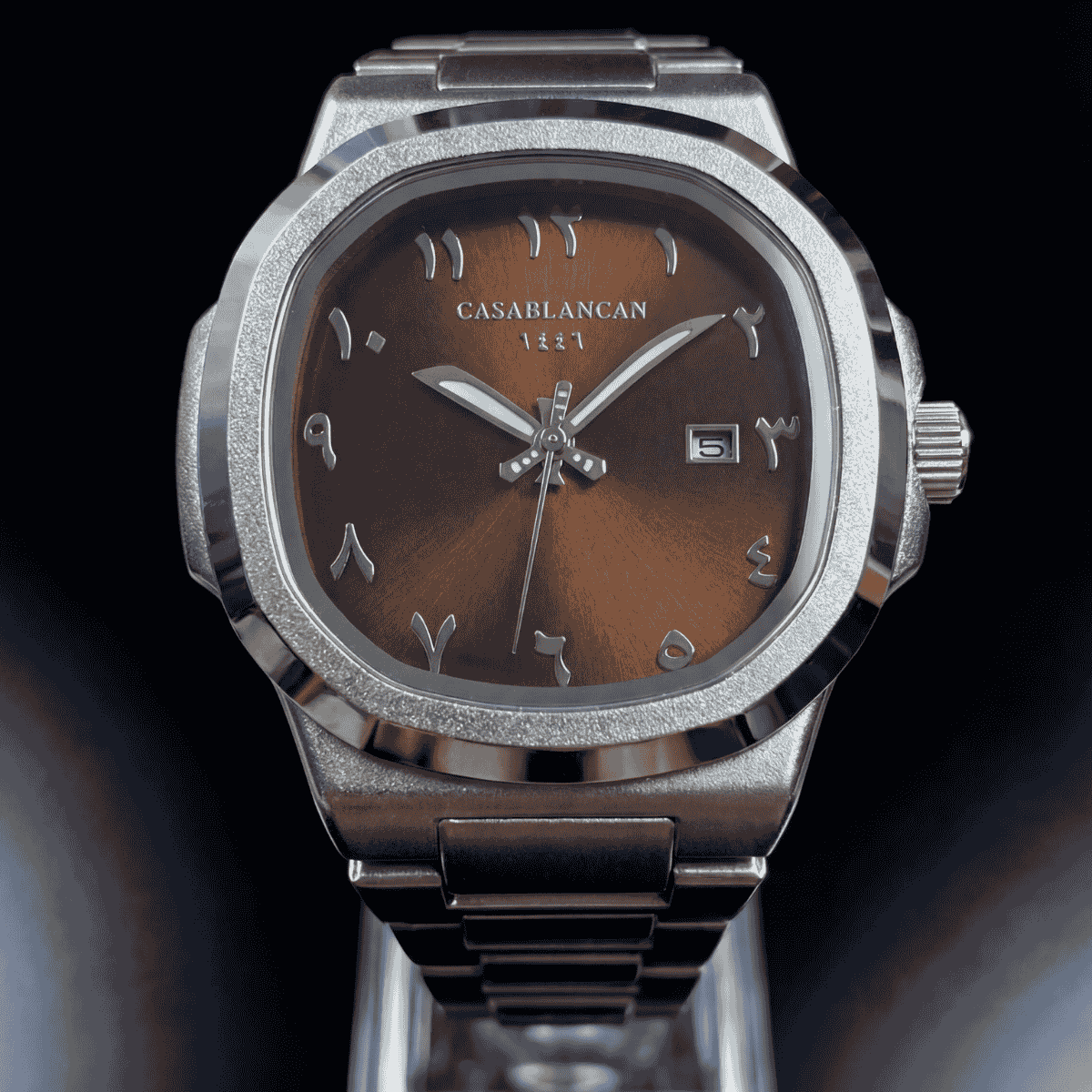
Casablancan places an Eastern Arabic numeral at every hour, from ١ at one o'clock around to ١٢ at the top. The same script appears on signs, receipts and documents across much of the Arab world, so the markers read naturally to anyone raised with them.
If the script is new to you, learn ٣, ٦ and ٩ for the quarter hours, and you can tell the time at a glance.
The Khanjar, the curved dagger traditionally worn at the front of the belt in Oman, gives its outline to the hour and minute hands. On a kandura, that reference to formal regional dress feels at home without turning the watch into a costume piece. Because the meaning sits in the hands themselves, the dial needs no engraving, raised emblems or extra subdials to show where its ideas come from. The result stays flat and calm, which is what a loose sleeve rewards.
Quiet details like these work best when they stay clear over years of daily wear. A sapphire crystal resists scratches far better than mineral glass, so fine numerals and slim hand tips remain sharp under it. Before you buy any watch with this kind of dial, stand by a window in your white kandura. The sunray finish should brighten, while the ١٢ and both hand tips stay easy to pick out.

The Dune Heritage is our own watch at Casablancan, and it follows the same rule of keeping things plain under a kandura sleeve. Its 304 stainless steel case is 43mm across and 11mm thick, the watch weighs 134g, and a steel bracelet comes with an adjustment tool. A brown sunray dial carries Eastern Arabic numerals at every hour and hands shaped like the Khanjar dagger. It has sapphire crystal and a quartz movement, and it costs $79. It belongs to our Arabic dial watches collection.
Frequently asked questions
How tight should a watch bracelet be when worn with a kandura?
A watch bracelet worn with a kandura should leave room to slip one finger under the band. A loose bracelet slides toward your hand when you gesture, and a tight one pinches. The right fit lets the watch show at the sleeve's edge when you raise your arm.
How can I check at home whether a watch fits my wrist?
Lay the watch flat and check that the lugs stop at or inside the edges of your wrist. If the cuff closes easily and glides over the watch, the height suits both a tailored shirt and a kandura.
Can a chunky watch damage a kandura sleeve?
A chunky watch can snag light kandura fabric with protruding pushers, an oversized crown or a raised, notched bezel. Over hours of reaching, writing and greeting, that rubbing can pull loose threads near the cuff. A smooth case with soft edges lets the sleeve glide past.
Does a sunray dial have to match my accessories exactly?
A sunray dial shifts shade as light moves across it, so the color looks lighter or deeper depending on the angle. Because of that shimmer, the match with sandals, a belt or an agal only needs to be close enough to read as related.
How do you read Eastern Arabic numerals on a watch dial?
A dial with Eastern Arabic numerals at every hour runs from ١ at one o'clock around to ١٢ at the top.
Casablancan makes the Dune Heritage mentioned in this article.
Read more
The Citizen Promaster Air Automatic in Super Titanium is a sub-$1,000 tool watch reviewed by aBlogtoWatch. It has a 40mm case, 200 meters of water resistance, a sapphire display caseback and Citize...
Chinese independent watchmaker Qian GuoBiao has announced a Grade 5 titanium version of his Facing The Sky 2.0. It has a 39mm case and a bracelet made in his Dongguan workshop. It comes in Blue Lag...